1963 Chevrolet Corvette Base
Price: $66,997
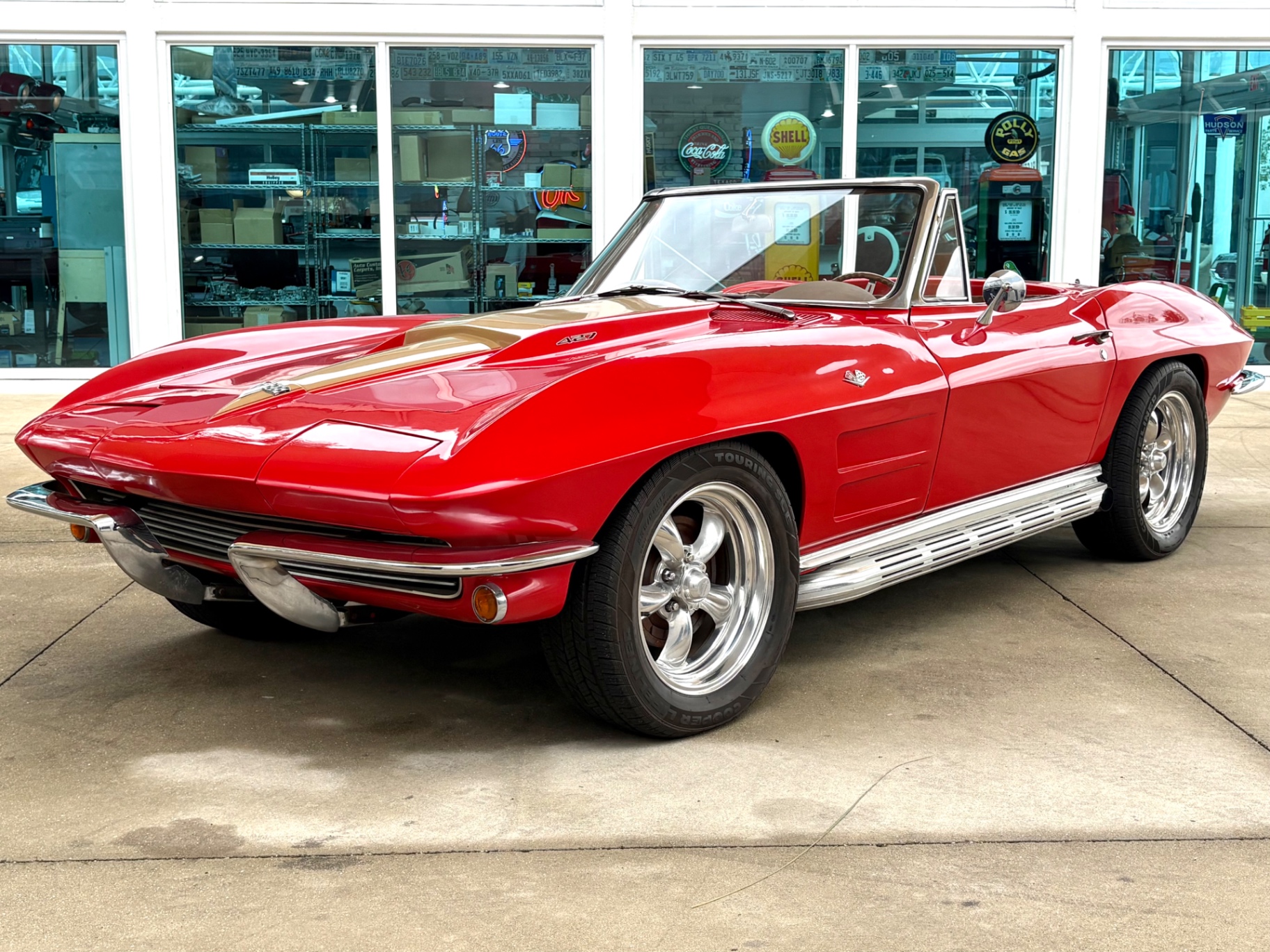
The 1963 Chevrolet Corvette Sting Ray was a clean-sheet redesign that redefined what an American sports car could be. It was the first Corvette to wear the Sting Ray name officially, the first to offer a coupe body style, and the first to introduce independent rear suspension as a standard feature — a chassis engineering leap that put it in direct conversation with European sports cars of the era. Chevrolet built 21,513 Corvettes for the 1963 model year, split between the iconic split-window coupe and the convertible. This is one of the convertibles, and it carries the bones of one of the most important model years in Corvette history. The 1963 Corvette Sting Ray was designed by Bill Mitchell and Larry Shinoda, and the body lines they created have aged better than almost any other American car of the postwar era. The long hood, recessed headlights, and pinched waistline were all new for 1963 and set the visual template for the entire C2 generation, which ran through 1967. From a collector and driver standpoint, the 1963 is the first year of the body style and holds a particular place in the market because of it. This specific car has been built as an honest driver — not a trailer queen, not a numbers-matching show car — but a 1963 Corvette Sting Ray with real performance upgrades and a freshened interior that make it significantly more enjoyable to own and drive than a stock example at this price point. The 427 cubic inch big block engine, Holley Sniper EFI system, Muncie 4-speed manual transmission, and detailed undercarriage tell you clearly what kind of car this is and what kind of owner built it. The heart of this 1963 Chevrolet Corvette Sting Ray is a 427 cubic inch big block V8. It is worth noting that the 427 was not a factory option in 1963 — Chevrolet offered small blocks and the 396 in later years, with the 427 becoming a Corvette option beginning in 1966. What this car has is a 427 big block that was installed as part of a performance build, which is a common and well-respected practice in the Corvette hobby. The engine has been fitted with a Holley Sniper EFI system in place of a conventional carburetor. The Sniper is a throttle body fuel injection unit that mounts in the same location as a four-barrel carb, but delivers electronic fuel metering, self-tuning capability, and significantly improved cold-start and hot-restart behavior. For a car that gets driven, not just shown, this is a practical and reversible upgrade. Polished aluminum valve covers and a cross-flag air cleaner keep the engine bay looking period-correct from a distance while the EFI does its work underneath. The Muncie 4-speed manual transmission is the correct gearbox for this car both historically and mechanically. Muncie close-ratio and wide-ratio 4-speeds were the performance transmission of choice for Corvettes throughout the 1960s, and pairing one with a 427 big block is exactly how serious Corvette builders have always approached the combination. An aluminum radiator handles cooling duties, which is a sensible upgrade given the additional heat output of the larger displacement engine. The 1963 Corvette Sting Ray's independent rear suspension was a major engineering story when this car was new. For the first time, Corvette buyers got a fully independent rear setup using U-jointed half-shafts, a three-link arrangement with a transverse leaf spring, and a fixed differential — replacing the solid rear axle of the C1 generation. The undercarriage on this car has been detailed and presents cleanly on the lift, which gives you a clear look at that rear suspension geometry and confirms the overall condition of the car beneath the body. The exhaust exits through chrome side pipes, routed along the rocker panels in the style that became strongly associated with performance Corvettes of the mid-1960s. The 427 Stinger hood — the raised, functional-look hood named for its center spine — is correct cosmetically for a big block Corvette build and provides the clearance needed for the taller intake components. The interior of this 1963 Corvette Sting Ray has been redone in new tan leather throughout. Both bucket seats are covered in fresh saddle-tan leather with clean stitching and no visible wear. The door panels carry the correct ribbed pattern for a 1963 Corvette with matching tan upholstery and tan loop carpet on the lower section. The carpeting throughout the cabin is also tan, which creates a consistent, warm color environment that works well against the red exterior. The dashboard layout is original 1963 Corvette — a black-textured instrument panel with a large central speedometer and tachometer flanked by four smaller auxiliary gauges covering fuel, temperature, battery, and oil pressure. This full gauge cluster is one of the details that makes the C2 Corvette interior so driver-focused. Everything you need to monitor the engine is directly in front of you without having to search for a warning light. The steering wheel is the correct three-spoke design with a cross-flag horn button and a tan rim that matches the rest of the interior. The shifter sits in the correct location in the center console, surrounded by the original chrome trim plate with the shift pattern visible on the gate. A Holley Sniper handheld controller is mounted in the console area, giving the driver access to real-time EFI data and tuning — a practical addition that stays out of the way of the original interior design. The passenger side of the dashboard carries the original Corvette Sting Ray script badge on the brushed aluminum glove box panel, which is one of the most recognizable interior details of the C2 generation. A Custom AutoSound stereo has been integrated into the console, providing modern audio capability without significantly altering the original dashboard. The tan convertible top is in place and appears in good condition. The 1963 Corvette Sting Ray convertible did not come with a removable hardtop as standard equipment, though one was available as an option. This car presents as a straight convertible with the soft top as its primary weather protection. The exterior is finished in red, which is one of the most historically associated colors with the Corvette name. The body panels are fiberglass, as they have been on every Corvette since 1953. The 1963 Sting Ray body is notable for its compound curves and the absence of external door handles — a design choice that gave the car a cleaner flanks and required the driver to use a cable-pull release inside the door. The front end features the recessed, non-opening hood ornament placement, split grille treatment, and retractable headlights that were new for 1963 and remained a Corvette signature for years. The 427 Stinger hood sits correctly on the car and gives the nose an intentional, purposeful look that separates a built Corvette from a stock one. Chrome side exhaust pipes run along the lower rocker panels on both sides, exiting cleanly without visible rust or damage. The Sting Ray fender badges are present and correct. The wheels are American Racing Torque Thrust units, one of the most period-correct aftermarket wheel choices available for a 1960s American performance car. The Torque Thrust design dates to the early 1960s and was widely used on competition cars of that era. On a red 1963 Corvette Sting Ray, they are a natural fit visually and historically. The tires are Cooper brand radials, providing modern rubber compound performance on the classic design. The undercarriage photos show a car that has received meaningful attention below the body. The chassis, subframe, and suspension components have been cleaned and coated. The independent rear suspension components are clearly visible from underneath and show the detail work that went into the underside of this car. The front suspension, crossmember, and steering components are similarly clean. This is not a car that has been polished on top and neglected underneath. The 1963 Chevrolet Corvette Sting Ray convertible is the car that established what the C2 generation would be — sharper, more sophisticated, and genuinely competitive with the sports cars coming out of Europe at the time. This example has been built by someone who understood both the history of the car and what it takes to make one drive well in the real world. The 427 big block, Holley Sniper EFI, and Muncie 4-speed combination is purpose-built for a driver who wants to use the car. The fresh tan leather interior, detailed undercarriage, and chrome side exhaust pipes show that equal attention was paid to how the car looks. It is a 1963 Corvette Sting Ray that you can get in and drive today, whether that means a Saturday morning run down the coast or a longer trip without the anxiety that comes with owning an unmodified 60-year-old carburetor car. If you would like to know more about this 1963 Chevrolet Corvette Sting Ray, call Skyway Classics in Sarasota, Florida at 941-254-6608. Our team is happy to answer questions, arrange a walk-around video, or help coordinate shipping anywhere in the country.
- Mileage: 100 mi
- Transmission: Muncie 4-Speed Manual
- Body Type: Convertible
- VIN: 30867S109718
- Stock #: MIU76451
- Location: Sarasota, FL