1965 Chevrolet Corvette Base
Price: $79,997
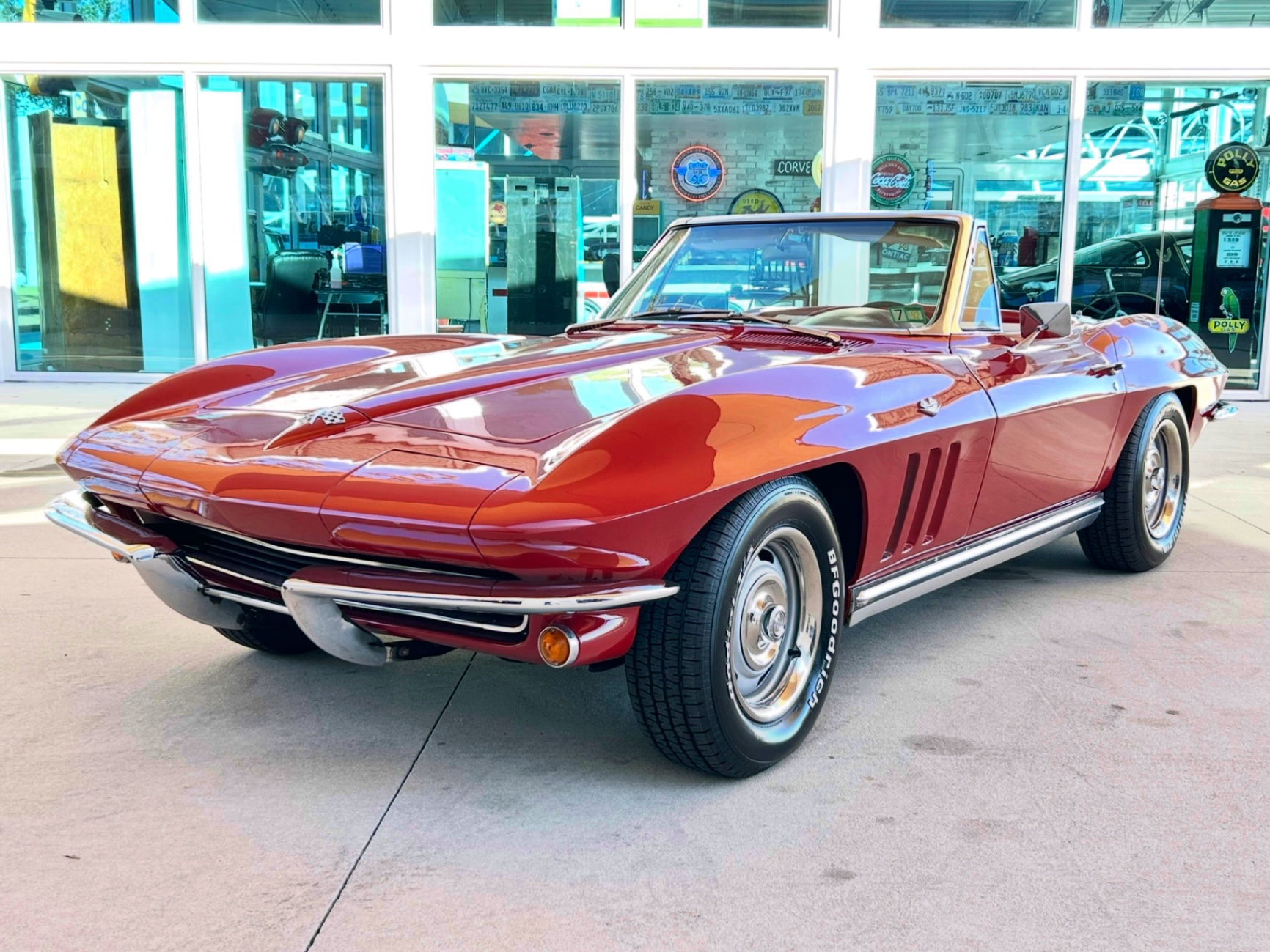
The 1965 Chevrolet Corvette Sting Ray is widely regarded as the high-water mark of the second-generation C2 body style. It was the first year Chevrolet offered four-wheel disc brakes as a factory option on the Corvette, a major engineering step forward that set the car apart from everything else on the American market at the time. The 1965 model also marked the final year for the distinctive vertical grille insert on the front hood, a styling detail that gave the C2 much of its visual identity. Chevrolet built 8,186 Corvette convertibles for the 1965 model year, making the open-top car the more popular body style by a significant margin over the coupe. The VIN on this car decodes to a 1965 Corvette convertible built at the St. Louis assembly plant, which was the sole production facility for the Corvette from 1954 through 1981. The model year indicator, body style code, and sequential production number all check out correctly for a mid-production 1965 build. This is a genuine, numbers-verifiable Sting Ray convertible, not a clone or a re-body. What makes this particular car worth serious attention is the combination of a desirable powertrain, extensive convenience options, and a red over white color pairing that was among the most requested combinations from the factory. The 327 cubic inch small block backed by a Muncie close-ratio 4-speed was the configuration most Corvette buyers in 1965 were after. Add power steering, power brakes, and a heavy duty radiator, and you have a car that was ordered by someone who wanted both performance and everyday driveability from day one. The engine in this 1965 Corvette Sting Ray is a 327 cubic inch V8 carrying casting number 3858174, which is correct for the small block 327 used across several Corvette applications in the mid-1960s. The block is finished in the factory orange paint that Chevrolet used on its small block V8s during this era. Topped with a 4-barrel carburetor and a chrome open air cleaner, the engine presents cleanly and runs through a dual exhaust system fed by the original-style rams head cast iron exhaust manifolds. Chrome valve covers dress the top of the engine and are consistent with the period. Moroso valve covers are visible in the engine photos, which is a common and accepted upgrade among drivers who use these cars regularly. Backing the 327 is a Muncie 4-speed manual transmission. The Muncie, built by GM's Muncie, Indiana gear plant, was the transmission of choice for performance Corvette buyers throughout the 1960s. Its reputation for durability and precise gear feel made it a standard recommendation among Corvette enthusiasts then and now. The drivetrain is paired with power steering and power brakes, both of which were factory options in 1965. Power brakes on the 1965 Corvette worked with the standard front disc and rear drum setup, or in conjunction with the optional four-wheel disc brake system. The presence of power brakes on this car adds to its usability as a regular driver. A heavy duty radiator rounds out the cooling system, appropriate given the 327's heat output under sustained driving. The underside photos show a clean, well-preserved floor pan and chassis. The frame rails and suspension components are free of significant corrosion, and the dual exhaust routing is clearly visible with pipes in good condition. The independent rear suspension, which was one of the defining engineering achievements of the C2 generation when it debuted in 1963, is visible and intact. The Muncie 4-speed transmission tunnel and aluminum case are clearly visible from below and present well. The interior of this 1965 Chevrolet Corvette Sting Ray is trimmed in white leather, a color that contrasts sharply against the red dashboard, door surrounds, and center console that were standard on red Corvettes of this era. The individual twin bucket seats are white leather and show well in the photos, retaining their shape and surface quality. The black carpet is intact and provides a grounding contrast to the white seating surfaces and door panels. The instrument panel on the 1965 Sting Ray was one of the most driver-focused layouts in any American production car of the period. The primary binnacle directly ahead of the driver houses a matched speedometer and tachometer — both large and easy to read at speed. Flanking those main gauges are four smaller secondary instruments covering fuel level, temperature, oil pressure, and battery voltage. To the left of the steering column, the supplemental panel carries the headlight switch, headlamp retractor switch for the hideaway headlight system, hood release, and the four-position ignition switch. The radio occupies the center stack between driver and passenger. This was a thoughtfully designed cockpit for its time, and it holds up well today. White door panels with chrome trim details align with the rest of the interior's color scheme. Dual sun visors are present. The black steering wheel is the correct style for this model year. The Corvette Sting Ray badge on the passenger-side instrument pod is a period-correct detail that collectors and judges often check. It is present and intact on this car. The exterior of this 1965 Chevrolet Corvette Sting Ray Convertible is finished in bright red, one of the most historically associated colors with the Corvette nameplate and one that was consistently popular with Corvette buyers throughout the 1960s. The paint presents well in the photos, showing good depth and consistent coverage across the fiberglass body panels. The body lines of the C2 Corvette — the pronounced rear fender haunches, the sculpted side coves, and the fastback-influenced convertible beltline — are all visible and intact. The 15-inch Rallye wheels wear chrome trim rings and center caps, a clean and appropriate wheel choice for a mid-1960s Corvette that avoids the common misstep of over-wheeling these cars. Mounted to those wheels are BF Goodrich Radial T/A tires with raised white letters, a tire with its own performance history and a good match for this car both aesthetically and functionally. The dual exhaust tips exit symmetrically at the rear beneath the bumper, consistent with the factory configuration. The hideaway headlights are operated by the switch on the dashboard and retract flush into the front fascia when closed, one of the most recognizable design elements of the C2 generation. The convertible soft top is present and appears in good condition in the photos. The windshield surround and exterior chrome trim, including the front bumper guards and rear bumper assemblies, are visible and consistent with the car's overall presentation. The 1965 Chevrolet Corvette Sting Ray Convertible is one of the most sought-after configurations in the C2 generation, and this example combines the right engine, the right transmission, and a highly desirable color combination in a package that has clearly been maintained by people who care about these cars. The 327 small block, Muncie 4-speed, power steering, power brakes, and correct interior trim make this a complete, well-optioned car rather than a stripped-down base model. The underside photos confirm a clean, solid chassis that supports the car's overall presentation. For the buyer who wants a C2 Corvette that can be driven to a show, driven home from the show, and enjoyed on a Sunday morning without reservation, this 1965 Chevrolet Corvette Sting Ray checks every important box. To learn more about this 1965 Chevrolet Corvette Sting Ray or to schedule a time to see it in person, call Skyway Classics in Sarasota, Florida at 941-254-6608.
- Mileage: 58,980 mi
- Transmission: Muncie 4-speed manual
- Body Type: Convertible
- VIN: 194675S117213
- Stock #: MIU28730
- Location: Sarasota, FL