1969 Chevrolet Camaro COPO
Price: $69,997
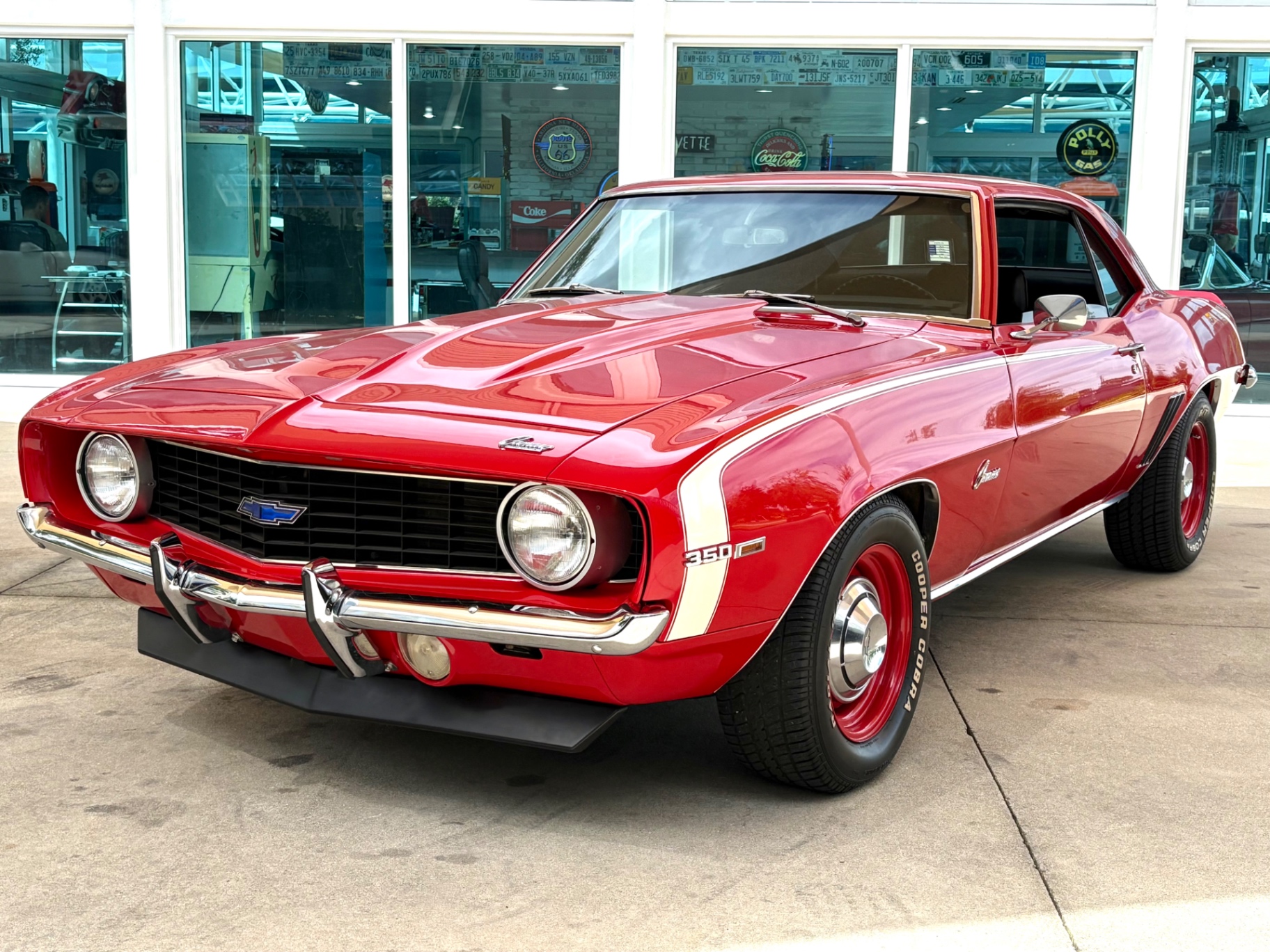
The 1969 Chevrolet Camaro is widely considered the high-water mark of the first-generation platform. Chevrolet redesigned the body that year, giving it a longer, lower, and more aggressive stance compared to the 1967 and 1968 cars. The front end was wider, the roofline was lower, and the overall proportions were sharper. It worked — the 1969 Camaro outsold both of its predecessors and remains one of the most recognized muscle car silhouettes ever produced. Chevrolet built just over 243,000 Camaros for the 1969 model year before a retooling shutdown stretched production into January 1970, making some of the last 1969s technically early-1970 production cars. The COPO — Central Office Production Order — is where the 1969 Camaro story gets genuinely interesting. Chevrolet's corporate policy at the time prohibited engines larger than 400 cubic inches in the Camaro. To get around that restriction, dealer-level performance specialists like Don Yenko and Fred Gibb used the COPO ordering system, originally designed for fleet and commercial orders, to request from the factory configurations that bypassed standard option limitations. The result was a small number of Camaros — famously the COPO 9561 and COPO 9562 — that left the factory with the L72 427 cubic inch engine or the ZL1 all-aluminum 427. Fewer than 70 ZL1 Camaros were built, and they remain among the most valuable American production cars ever made. This 1969 Chevrolet Camaro is presented as a COPO-style tribute build rather than a numbers-matching original. The VIN confirms it as a genuine 1969 Camaro coupe built at the Norwood, Ohio assembly plant. What the builder has done is take that authentic first-gen body and equip it with a purpose-built 383 cubic inch stroker V8 nearing 400 horsepower, a comprehensive brake and suspension upgrade, fresh PPG red paint, and a fully restored black interior. The result is a 1969 Camaro that drives and presents well above what most factory cars from that era were capable of delivering, while wearing the look of one of the most desirable configurations the model ever carried. The heart of this build is a 383 cubic inch stroker small block Chevrolet V8. The 383 stroker is one of the most common and well-understood performance combinations in the hobby — it uses a 350 block bored 0.030 over and fitted with a 400 crankshaft to achieve the displacement increase. When properly assembled with appropriate heads, camshaft, and induction, output in the neighborhood of 380 to 400 horsepower is realistic, which is consistent with what is claimed here. This engine is fed by a performance 4-barrel carburetor sitting on an aluminum intake manifold, which reduces weight over the engine compared to a cast iron unit and improves thermal efficiency. The open-air chrome air cleaner assembly is a period-correct visual detail that also provides unrestricted airflow. Billet Chevrolet logo valve covers dress the top of the engine and coordinate with the overall presentation of the engine compartment, which has been painted and detailed to show-quality standards. Exhaust exits through tube headers, which replace the factory exhaust manifolds and reduce back pressure for improved power output and throttle response. The headers feed into a Flowmaster dual exhaust system, which exits through dual tips visible below the rear bumper. Flowmaster's chamber-style mufflers are known for producing a distinctive, aggressive exhaust tone without the rasp that some straight-through designs produce. Cooling is handled by an aluminum radiator paired with an electric fan, a practical upgrade that eliminates the parasitic drag of a belt-driven fan and provides more consistent cooling at idle and low speed. Power steering is fitted, which makes the car considerably more manageable in parking lots and around town than a manual box. The brake system is one of the more significant functional upgrades on this car — CPP 4-wheel power disc brakes replace the factory front-disc/rear-drum setup that most 1969 Camaros left the factory with. Four-wheel disc braking provides substantially better stopping performance and more consistent pedal feel under repeated use. The underbody photographs confirm a clean, painted chassis with the Flowmaster mufflers and 10-bolt rear axle visible and in good condition. The cabin of this 1969 Chevrolet Camaro has been fully restored in black. The twin front bucket seats are upholstered in black leather with integrated headrests, which were a federally mandated addition for the 1969 model year. The rear bench seat carries the same ribbed black leather treatment and provides the correct factory look throughout the cabin. Door panels are the correct 1969 style with Camaro script badges and chrome trim accents, and they show well in the photographs. The center console runs the length of the transmission tunnel and features a wood-tone finish consistent with the SS interior package. The horseshoe-style shifter is correct for an automatic-equipped console car from this era. Mounted to the console is an accessory gauge pod carrying additional instrumentation. The factory dashboard retains its original gauge cluster, including the tachometer, which was a key option on performance-equipped 1969 Camaros — the in-dash tach is far more desirable to enthusiasts than the column-mounted or console-mounted aftermarket units that appeared on lesser-equipped cars. The steering wheel is a black SS unit with the SS emblem centered on the hub, which is the correct appearance for this style of build. A Kenwood stereo head unit has been integrated into the dash without cutting visible holes in the original panel, maintaining a reasonably factory appearance from the driver's seat. Tinted glass is fitted all around, and the trunk has been finished with carpet, a detail that reflects the level of care put into the overall build. The body wears new PPG base coat/clear coat paint in red, applied over what appear to be straight, well-fitting panels. PPG is one of the benchmark names in automotive refinishing, and base/clear application provides a durable, high-gloss finish that holds up better over time than single-stage urethane. The paint is complemented by white body stripes, which are consistent with the SS and COPO stripe packages offered on the 1969 Camaro. The combination of red with white stripes is one of the most visually correct and period-appropriate color schemes for this generation of the car. The cowl induction hood is a functional and period-correct addition. On the original COPO and Z28 cars, cowl hoods were used to draw cooler, high-pressure air from the base of the windshield directly into the intake. The hood on this car replicates that look accurately. The chin spoiler below the front bumper and the rear deck spoiler above the trunk are the style of add-on aero pieces that were popular on performance Camaros in the late 1960s and early 1970s. Bumper guards are fitted front and rear, protecting the chrome bumpers. The wheels are red painted steel units wearing COPO-style center caps and hubcaps, which replicate the look of the factory rally wheel and hubcap combination used on COPO-ordered cars. Mounted to those wheels are P235/60R15 Cooper Cobra Radial G/T tires in white letter. The Cooper Cobra is a bias-ply appearance tire in a radial construction, which gives the car the visual look of a period tire while providing modern handling characteristics. The underside of the car has been painted and shows no obvious rust, rot, or structural concerns in the photographs. This 1969 Chevrolet Camaro COPO replica represents a well-executed, driver-quality build on one of the most desirable platforms in American muscle car history. It is not a numbers-matching car and is not presented as one. What it is, is a genuine 1969 Camaro body that has been upgraded with a strong 383 stroker V8, four-wheel disc brakes, power steering, fresh PPG paint, and a fully restored black interior — all assembled to deliver a car that looks correct, drives well, and requires nothing. For a buyer who wants the look and feel of a 1969 Camaro COPO without the six-figure cost and anxiety of owning an original, this car makes a compelling case for itself on its own merits. To schedule a walk-around or discuss this 1969 Chevrolet Camaro in detail, call Skyway Classics in Sarasota, Florida at 941-254-6608.
- Mileage: 69,686 mi
- Transmission: Automatic
- Body Type: Coupe
- VIN: 124379N679512
- Stock #: MIU28727
- Location: Sarasota, FL