1976 Chevrolet Corvette Stingray
Price: $24,997
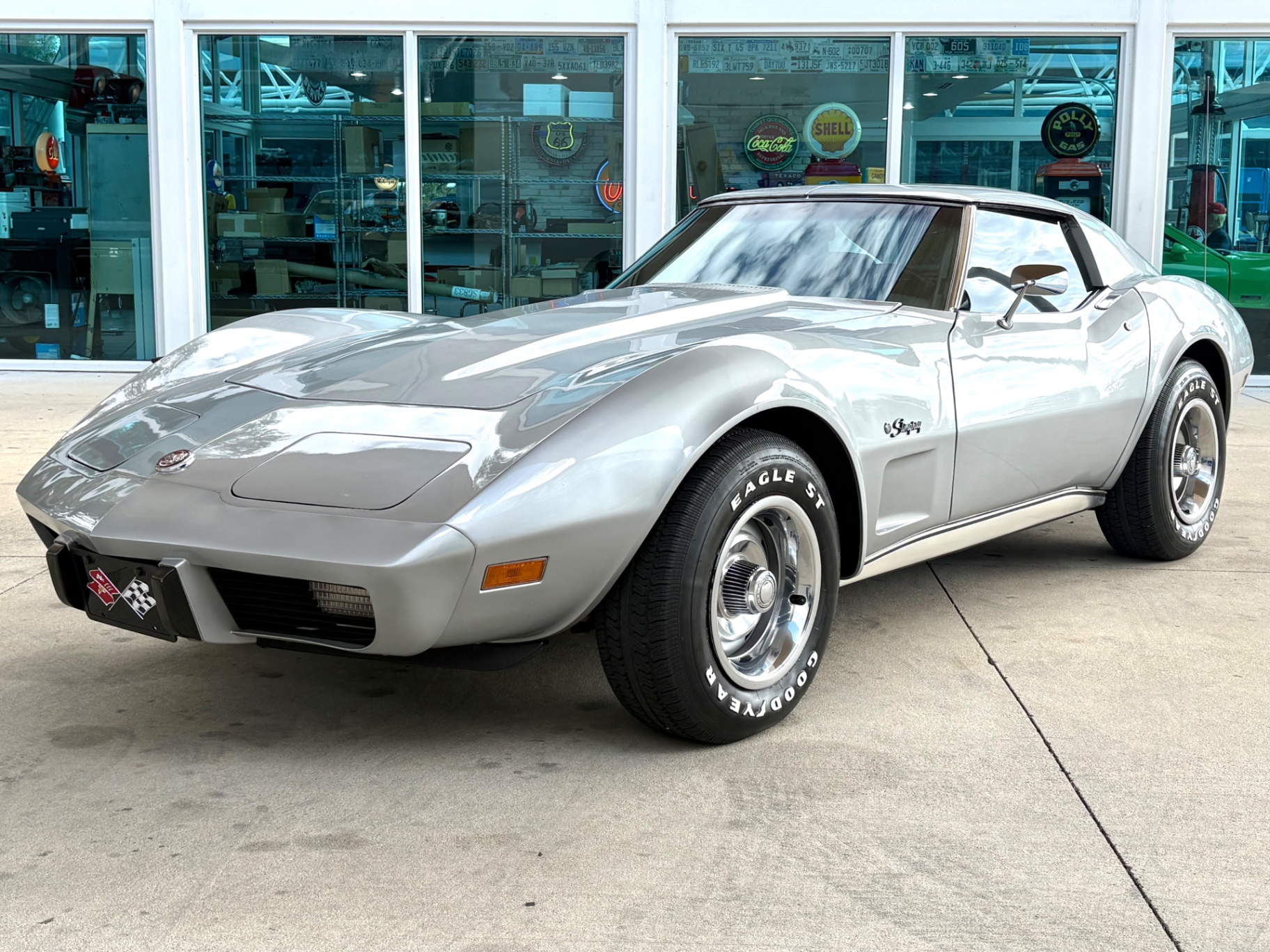
The 1976 Chevrolet Corvette Stingray sits at an interesting crossroads in the model's history. It was the last year the Corvette carried the Stingray name before Chevrolet dropped it for 1977. It was also the first year since 1968 that a Corvette could not be ordered as a convertible — GM had permanently closed the open-top option after 1975, making the 1976 a T-top coupe exclusively. For collectors who want the classic C3 Coke-bottle shape without the complication of a ragtop, 1976 hits a sweet spot. Production that year totaled 46,558 units, all built at GM's Bowling Green-predecessor plant in St. Louis, Missouri. Of those, GM records show 6,934 were finished in silver — a color that was popular but well short of dominant in that year's mix. This car is one of them. The combination of silver exterior and black vinyl interior was a clean, straightforward pairing that has aged well and reads correctly to anyone familiar with the C3 generation. The VIN on this car decodes to confirm it was built in St. Louis in the 1976 model year with the L-48 350ci V8, and the engine identification plaque still present on the dashboard confirms the same — 350 cubic inches, 8.5:1 compression ratio, with the Corvette crossed-flags emblem intact. That plaque is a small but meaningful detail that many cars have lost over the years. What makes this particular 1976 Chevrolet Corvette worth your attention is the combination of a solid, rust-free undercarriage, an honest and well-preserved interior, and a powertrain that has been given some thoughtful upgrades without being turned into something it was never meant to be. The engine in this 1976 Chevrolet Corvette is the L-48 350ci V8, which was the standard powertrain for the model year. By 1976, emission controls had taken a real toll on output across the industry, and the L-48 was rated at 180 horsepower — a number that looks modest on paper but reflects the net measurement standards that GM adopted in 1972, which calculated power with all accessories installed and running. The engine itself is fundamentally the same small-block architecture that had been powering Corvettes for years, and it remains one of the most parts-supported engines in existence. On this car, the original air cleaner has been replaced with a polished Edelbrock chrome unit sitting on a polished aluminum intake manifold. These are common and well-regarded upgrades that improve airflow presentation in the engine bay without altering the fundamental character of the drivetrain. The valve covers remain in the correct Corvette red, and the engine bay overall is tidy and correct-looking. The factory Delco Air AC compressor is present and in its correct location, as is the power brake booster and power steering pump with reservoir — all items that are often missing or replaced on cars that have been through multiple owners. The TH350 3-speed automatic transmission is the correct unit for this build. It is a durable and well-understood gearbox, and parts and rebuild kits are widely available. The dual exhaust system runs the full length of the car and exits through the dual rear outlets that are characteristic of the C3 body style. Underneath, the independent rear suspension components are present and the undercarriage photographs show a car that has not been subjected to significant rust, rot, or structural compromise. The C3 Corvette's fiberglass body means rust is typically concentrated in the steel birdcage structure underneath, and this car's undercarriage shows no evidence of the kind of decay that disqualifies many examples at this price point in the market. The interior of this 1976 Chevrolet Corvette Stingray is finished in black vinyl, which was the factory specification for this build. The bucket seats on both the driver and passenger sides are in good shape, with the ribbed vinyl showing its age in an honest way without the cracking, sagging, or splitting that typically plagues C3 interiors that were not stored carefully. The seams appear intact and the seat structures are solid. The center console runs the length of the cabin between the two seats, finished with wood grain trim and housing the TH350 automatic shifter. The same wood grain pattern carries across to the door panel inserts on both sides, where it is framed by matching chrome trim. This was a standard interior treatment for the 1976 Corvette and it gives the cabin a finished, intentional look that holds up well compared to the plain interiors of the era's competitors. The dashboard is correctly configured with the full gauge cluster that the 1976 Corvette was known for. The driver faces a large speedometer and factory tachometer in a two-pod binnacle, while the center stack houses the secondary instruments: fuel level, water temperature, oil pressure, battery charge, and clock. All gauges are present. The AM radio occupies its factory position below the center gauges. The original Corvette 4-spoke steering wheel is in place, with the Corvette emblem centered on the horn cap — a detail that is frequently swapped out on these cars. Corvette logo floor mats cover both footwells on the driver and passenger sides. The 1976 Chevrolet Corvette Stingray body is finished in silver, one of 6,934 examples built that year in this color out of the total 46,558-unit production run. The Coke-bottle C3 shape — with its long hood, pinched waistline, and flared rear haunches — is exactly what the C3 generation is remembered for, and the silver finish photographs cleanly. The lower body panels and rear bumper are in good condition with no significant damage visible. The C3 Corvette ran from 1968 through 1982 and the 1976 model year sits squarely in the middle of the run. The body is fiberglass throughout, which means the panel gaps and surface finish are a product of the factory layup process rather than metal stamping. Corvette Rally Wheels are mounted at all four corners, wearing Goodyear Eagle ST tires. The rally wheel design was specific to the Corvette and is correct for this model year. The dual exhaust outlets are visible at the rear, flanking either side of the body-colored rear fascia, and the underside view of the rear bumper and lower panel shows no evidence of impact damage or filler. The T-top roof panels are not referenced in the available documentation, but buyers should confirm their condition and fit, as this is a common wear point on any 1976 Corvette. The roof structure itself on C3 cars is known to be solid as long as the birdcage has been kept dry, and nothing in the undercarriage inspection suggests moisture intrusion has been a problem here. The 1976 Chevrolet Corvette Stingray represents the final year of the Stingray name, the only full model year of convertible-free C3 production, and one of the cleanest expressions of the long-running C3 body style. This specific car brings a solid undercarriage, a correct and honest interior, a well-presented engine bay with a few sensible upgrades, and a silver-over-black color combination that suits the shape. It is built on the right bones and presented without the kind of cosmetic over-restoration that masks deferred mechanical work. For a buyer who wants a C3 that drives, shows well, and can be appreciated without ongoing rust remediation, this 1976 Corvette is worth a serious look. Call Skyway Classics at 941-254-6608 to schedule a walk-around, ask specific questions, or arrange an inspection. We are located in Sarasota, Florida and welcome buyers from anywhere in the country.
- Mileage: 32,891 mi
- Transmission: TH350 3-Speed Automatic
- Body Type: Coupe
- VIN: 1Z37L6S436852
- Stock #: MIU28536
- Location: Sarasota, FL