2003 Ford Mustang Mach 1
Price: $17,997
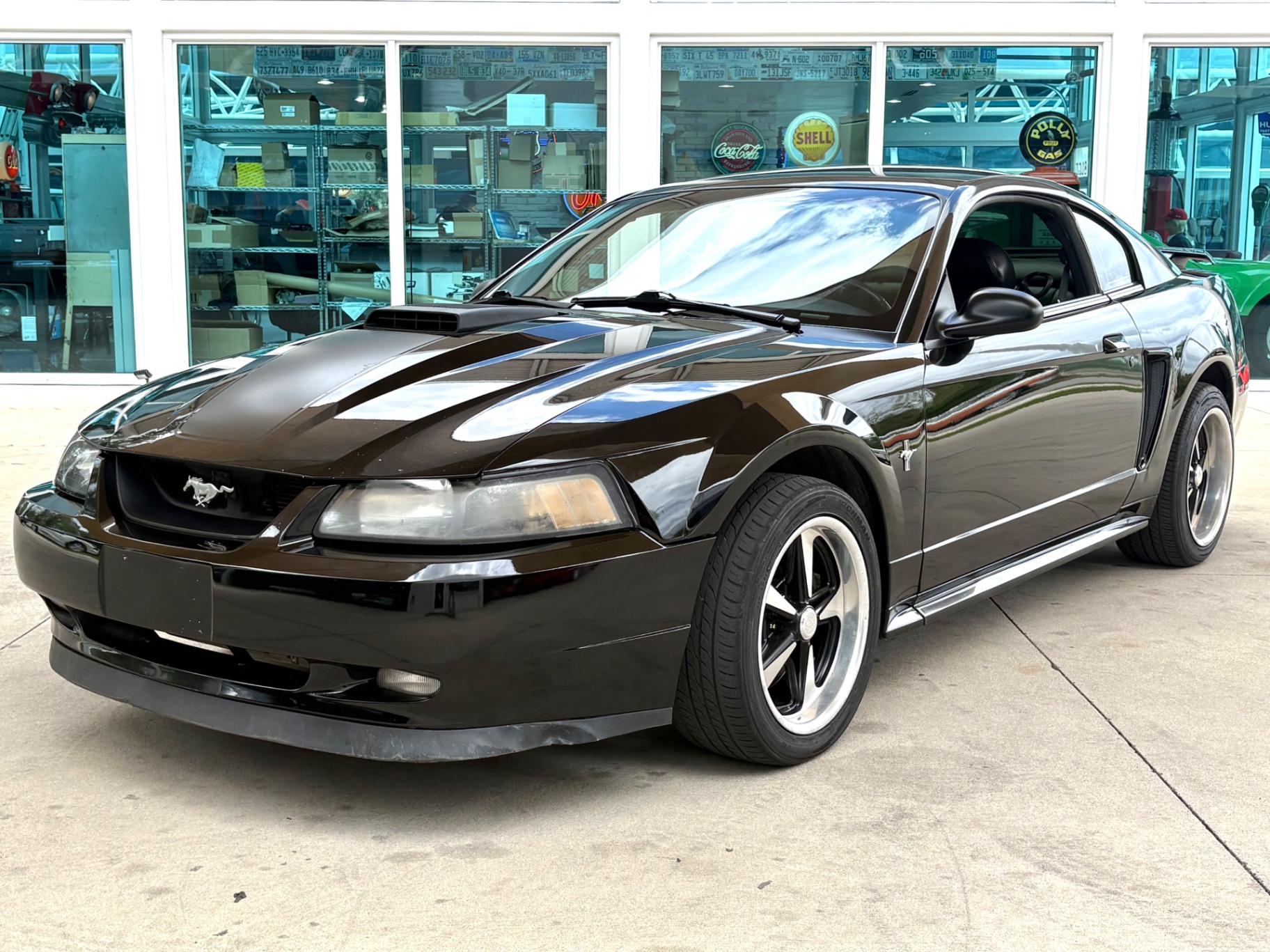
The 2003 Ford Mustang GT sits in an interesting spot in Mustang history. It was the final full model year of the SN95 generation before Ford rolled out the completely restyled S197 platform in 2005. That makes 2003 and 2004 the last of a long line stretching back to the 1994 redesign, and enthusiasts who know the lineage tend to appreciate these cars for exactly that reason. The SN95 GT with the 4.6L two-valve DOHC V8 — technically designated the 4.6L 32-valve in the Mustang Cobra trim, but this car carries the DOHC badge as noted on the engine cover — represents Ford's push to move away from the pushrod 5.0 and modernize the Mustang's powerplant. What makes this particular 2003 Ford Mustang GT worth a closer look is the combination of factory hardware and thoughtfully chosen aftermarket upgrades. The previous owner did not throw random parts at it. The modifications are focused on airflow, exhaust tone, chassis rigidity, and drivability — the kind of upgrades that Mustang GT owners have been making for decades because they work. The result is a car that drives noticeably better than a stock example without being so heavily modified that it becomes somebody else's project. Black over black keeps the appearance clean and intentional. The odometer photo in the listing shows just over 101,000 miles — a reasonable number for a 20-plus-year-old car that has clearly been maintained and driven rather than parked and neglected. The engine in this 2003 Ford Mustang GT is the 4.6-liter DOHC 32-valve V8, as confirmed by the valve cover badge visible in the engine bay photos. Ford rated this engine at 305 horsepower and 300 lb-ft of torque in stock form when it appeared in the Mustang Cobra. The DOHC head design gives the 4.6 a considerably different character than the two-valve SOHC version found in standard GT trim — it breathes more freely at higher RPM and responds well to the kinds of bolt-on modifications installed on this car. The JLT cold air intake is one of the most effective and popular bolt-ons for the 4.6 DOHC. It replaces the factory airbox with a larger diameter tube and filter positioned to draw cooler, denser air from outside the engine bay. The result is improved throttle response and a more direct intake sound that suits the car. The dual exhaust system with Flowmaster mufflers completes the breathing equation on the outlet side. Flowmaster's chambered muffler design produces the deep, aggressive tone that the 4.6 V8 is capable of but that the factory exhaust tends to muffle. The underside photos show the full exhaust layout clearly, including the X-pipe configuration that helps balance exhaust pulses between banks and contributes to midrange torque. The 5-speed manual transmission is paired with a Hurst shifter, which replaces the factory unit with a shorter, more precise throw. For anyone who has driven a stock SN95 with the factory shifter, the difference a quality short-throw unit makes in daily driving and performance use is immediate and meaningful. Below the car, the subframe connectors are clearly visible in the underside photos — powder-coated in black and fitted to the unibody floor pan between the front and rear subframes. The SN95 Mustang, like most Mustang coupes of its era, benefits substantially from subframe connectors because the unibody construction tends to flex under hard cornering and acceleration. Connectors reduce that flex, improving suspension geometry consistency and overall chassis feel. This is not a cosmetic upgrade. It is a structural one, and its presence here indicates the car was set up by someone who understood the platform. The sport-tuned suspension and limited slip differential round out the chassis package, keeping the power planted and the handling predictable. Braking is handled by four-wheel discs with ABS. Traction control adds an additional layer of safety when conditions call for it. Step inside the 2003 Ford Mustang GT and the all-black leather interior presents well. The bucket seats use a ribbed and textured insert pattern that was updated for the 2003 model year, and the photos show the seating surfaces are intact with normal wear consistent with the mileage. The driver's seat features power adjustment, which on a GT was an available option rather than standard equipment. The rear seat is a full leather-trimmed bench, also showing well in the photos. The center console houses the Hurst shifter, which sits taller and more prominently than the factory unit. The shift knob and boot are visible in the cockpit photos and the setup is clean. The leather-wrapped steering wheel carries the Mustang running horse at center, and the dash-mounted script Mustang badge — visible in the close-up photo — is the embossed signature styling detail Ford used throughout this generation's interior. The instrument cluster is the correct GT-spec unit with a 150 MPH speedometer and a tachometer prominently centered. The odometer readout is clearly legible in the cluster photo. A Sony double-DIN touchscreen head unit has been fitted in place of the factory radio, occupying the factory opening cleanly. It supports hands-free phone connectivity, which makes the car practical for everyday use. The original HVAC controls remain in place above the head unit, keeping climate operation simple and intuitive. Additional convenience equipment includes power windows, power mirrors, power door locks, tilt steering, air conditioning, cruise control, and a rear defogger. The rear privacy glass adds to the blacked-out appearance. Both front airbags are present, and the anti-theft alarm is factory-installed. This 2003 Ford Mustang GT is finished in black over a black interior — a straightforward combination that suits the car's character. The body carries the functional Shaker hood scoop, which passes through the hood and connects directly to the air intake system. The Shaker is one of the most recognizable visual and functional elements associated with high-performance Mustangs, with roots going back to the 1969 428 Cobra Jet. On this car it serves the JLT intake system and adds significant presence to the front end. A Mach 1 front chin splitter is fitted below the bumper, adding a more aggressive lower valance compared to the standard GT front fascia. The rear spoiler sits above the decklid. Both pieces are color-matched to the black body. The US Mag wheels are a custom fitment that replaces the factory GT alloy. US Mag makes traditional American-style wheels — spoke designs with a polished or machined lip — and the wheels on this car carry that aesthetic well against the black bodywork. The underside photos show clean, well-maintained suspension and structural components. The subframe connectors are powder-coated in black and look freshly done. The exhaust piping shows the heat patina of normal use. There is no visible rot or structural concern visible in any of the underside photos, which is particularly relevant for a Florida car. This 2003 Ford Mustang GT is a well-sorted example of the last generation of the SN95 body style. The DOHC V8, 5-speed manual, Hurst shifter, JLT intake, Flowmaster exhaust, subframe connectors, and limited slip differential are not a random collection of parts — they are a coherent set of upgrades that address the specific areas where the stock SN95 GT platform benefits most from attention. The Shaker hood, Mach 1 splitter, and US Mag wheels keep the exterior appearance purposeful. The black on black combination with a clean interior and functional amenities makes it as usable day-to-day as it is enjoyable on a back road. For a buyer who knows what an SN95 with these specifications can do and is looking for a driver-quality example rather than a stock showpiece, this car is worth a serious look. To schedule a viewing or ask questions about this 2003 Ford Mustang GT, call Skyway Classics in Sarasota, Florida at 941-254-6608.
- Mileage: 101,775 mi
- Transmission: 5-Speed Manual
- Body Type: Coupe
- VIN: 1FAFP42R83F436160
- Stock #: MIU28599
- Location: Sarasota, FL