2012 Ford Mustang Boss 302
Price: $39,997
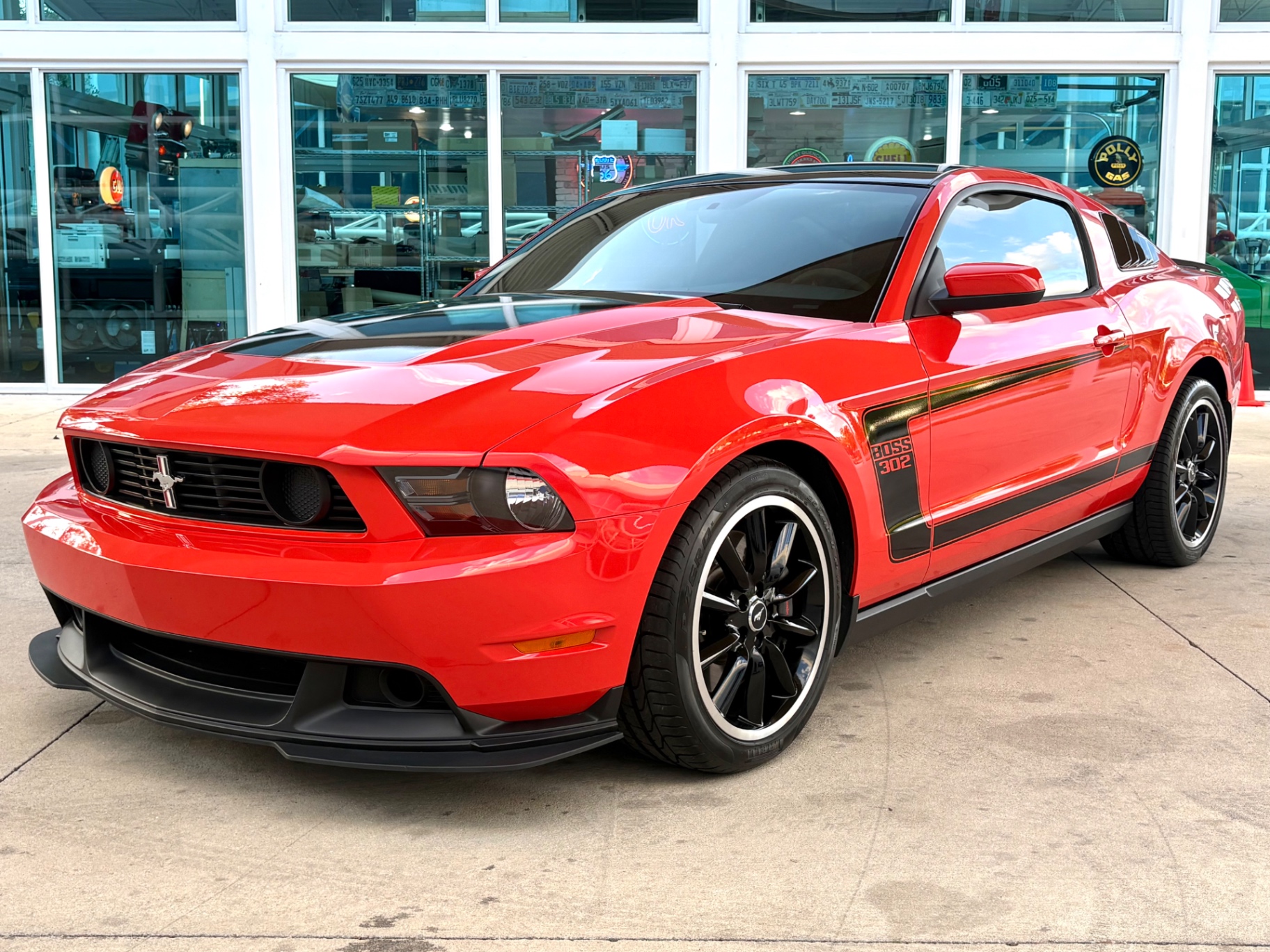
The 2012 Ford Mustang Boss 302 was not a trim level or an appearance package. It was a purpose-built performance car developed by a dedicated team inside Ford with one goal: build a Mustang that could compete with the Porsche Cayman S around a road course. That is not marketing language — Ford's own engineers used that benchmark publicly during development. The result was a factory road-racing machine sold through Ford dealerships, wearing a name that carried genuine weight in Mustang history. The original Boss 302 ran from 1969 to 1970, built specifically to homologate the engine for SCCA Trans-Am racing. Ford revived the nameplate in 2012 and 2013, and the revival was not taken lightly. The 2012 and 2013 Boss 302 received a unique version of the 5.0-liter Ti-VCT V8 — internally designated the Boss 302 — that shared its basic architecture with the standard Mustang GT engine but featured CNC-ported cylinder heads sourced from the 5.0-liter found in the Shelby GT500 of that era, a unique intake manifold, a higher 7,500 RPM redline, and side-exit exhaust routing through the engine compartment that made the factory headers visible under the hood. Ford rated the engine at 444 horsepower and 380 lb-ft of torque. That number was considered conservative by many who tested it on a dyno. This particular car is Serial Number 2234. Ford tracked Boss 302 production and issued each car a sequential serial number, which was documented and authenticated. This car comes with its original window sticker and full authentication documents, which is a significant detail for anyone planning to hold this car long-term. Authenticated, document-complete Boss 302s are already commanding premiums on the collector market, and the gap between a documented car and an undocumented one only widens over time. The orange exterior is one of the more visually assertive color choices available on the 2012 Boss 302, and combined with the black hood graphic and factory Boss 302 side stripes, the car presents exactly as Ford intended it to from the factory. The heart of the 2012 Ford Mustang Boss 302 is a 5.0-liter Ti-VCT V8 that was specifically modified for this application. The CNC-ported cylinder heads came directly from the Shelby GT500 parts bin, and Ford fitted the engine with a unique intake manifold designed to improve high-RPM breathing. The result is an engine that makes most of its power at the top of the rev range — it wants to be driven past 6,000 RPM, which is a different experience than a torque-heavy pushrod V8. The 7,500 RPM redline is genuine, not theoretical. The 6-speed manual transmission is the Getrag MT82, which was standard equipment on the Boss 302. There is no automatic option — Ford did not offer one on this model. The Torsen limited-slip differential is a meaningful detail here. The Torsen unit is a gear-type differential that provides smooth, progressive torque transfer without the on-off behavior of a clutch-type unit. It responds to torque rather than wheel speed, which makes it well-suited to road course driving and disciplined street driving alike. The TracKey system is one of the more interesting factory options Ford has ever offered on a production car. The Boss 302 came with two keys: a standard black key that operates the car normally, and a red TracKey that, when used, unlocks a second engine calibration stored in the ECU. The red key calibration includes revised throttle mapping, adjusted stability control parameters, and exhaust note changes via the secondary air system. Both keys are present with this car. The factory headers are visible in the engine bay — a detail that Boss 302 owners know well, as the side-exit routing was a deliberate packaging decision that contributed to the car's distinctive exhaust note and was not shared with any other production Mustang of the era. A spare set of new Ford brake pads is included with the sale. The 2012 Ford Mustang Boss 302 interior was configured for driver focus, not luxury. Recaro seats are present — these were a factory option on the Boss 302 and are a significant differentiator from the standard Mustang GT. The Recaros provided lateral support appropriate for the car's handling capability and are frequently among the first things buyers look for when evaluating a Boss 302. The seats show no wear, which is notable for a car of this performance level. Often these cars were used at track days or autocross events, and interior wear reflects that. This one does not. The Alcantara-wrapped steering wheel is another factory Boss 302 specific item. Alcantara was chosen over leather because it provides better grip when hands are moving quickly across the wheel, particularly without gloves. The center console, power windows, and air conditioning are all present and functional, meaning this car is comfortable enough for regular driving while retaining its track-focused character. The audio system has been upgraded with a Kenwood Excelon head unit that includes navigation, Bluetooth connectivity, and hands-free calling. Critically, the original radio and the original trim bezel are included and will transfer with the car. This means the next owner can restore the factory interior to fully original specification if desired, or keep the upgraded unit — the choice remains open. This kind of thoughtful ownership is reflected throughout the car. The orange exterior on this 2012 Ford Mustang Boss 302 is one of the colors most closely associated with the model's visual identity. The black hood graphic is a factory application that references the original 1969-1970 Boss 302 hood treatment. The Boss 302 side stripes run along the lower body and carry the Boss 302 identification on the front quarter panel — again, factory correct. These graphics were applied at the factory and are part of the car's documented specification. The factory front splitter is present and intact. This is a functional aerodynamic component, not a styling exercise — it was engineered as part of the Boss 302's front-end aerodynamic package. The black alloy wheels are the correct factory fitment for this model. Looking underneath the car, the dual exhaust outlets exit through the rear bumper fascia in the factory location, fed by a system that runs back from the side-exit headers under the car. The undercarriage in the photos shows a clean, well-maintained structure consistent with a car that has been stored and driven carefully. The car comes with the original Boss 302 car cover, which adds to the documentation package and confirms the car has been stored and cared for with its long-term value in mind. The 2012 Ford Mustang Boss 302 is already recognized as a future collectible, and the documentation gap between a properly papered example and one without its window sticker and authentication materials is only going to grow. Serial Number 2234 has both keys including the TracKey, both radios, the factory cover, the window sticker, and the authentication documents. The Recaro seats show no wear. The Torsen differential and TracKey calibration are intact and functional. The car presents in the correct color combination with all factory graphics and badging in place. For the buyer who understands what the 2012 Ford Mustang Boss 302 was engineered to do and what a complete, documented, unmodified example represents going forward, this car checks every box that matters. To schedule a viewing or ask questions about this 2012 Ford Mustang Boss 302, call Skyway Classics at 941-254-6608. We are located in Sarasota, Florida, and welcome serious inquiries from anywhere in the country.
- Mileage: 10,866 mi
- Transmission: 6-Speed Manual
- Body Type: Coupe
- VIN: 1ZVBP8CU1C5258503
- Stock #: MIU28596
- Location: Sarasota, FL