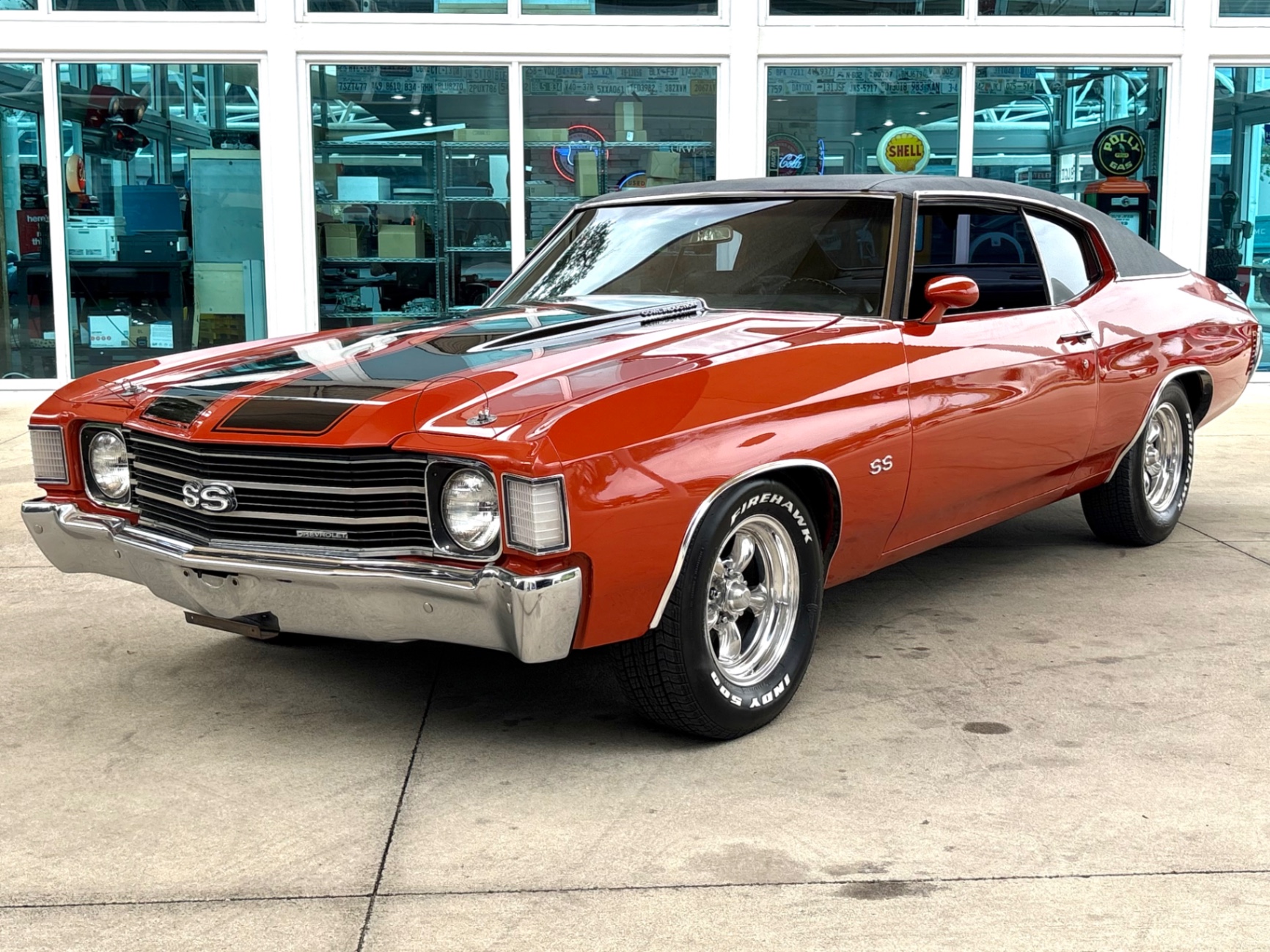
1972 Chevrolet Chevelle SS
Price: $47,797
The 1972 Chevrolet Chevelle SS holds a specific and well-understood place in muscle car history. It was the last model year the Super Sport package was offered as a standalone option on the Chevelle before Chevrolet restructured the lineup for 1973, making the SS designation part of a dealer-installed appearance package rather than a factory RPO option. That shift, combined with tightening emissions regulations and insurance pressures that were already pushing buyers away from big-cube performance cars, means 1972 was genuinely the end of an era for the Chevelle SS as enthusiasts had known it throughout the late 1960s. What makes 1972 Chevelle SS values hold up as well as they do is a combination of factors: the body style is widely considered the best-looking of the A-body generation, the SS trim package added specific badging and interior content that set it apart from a standard Malibu, and the cars were built in large enough numbers to keep parts available while still being desirable enough to attract serious collector interest. This particular car carries the SS trim package confirmed by the VIN, which encodes a Malibu Sport Coupe body style built at the GM Lordstown, Ohio assembly plant. The Orange Flame exterior paired with the black vinyl top and black interior is a high-contrast combination that works well on the 1972 body — the long hood, the hidden windshield wipers, the flowing roofline, and the distinctive twin-port taillights all benefit from a strong color choice. The engine compartment tells you what kind of owner this car has had. The combination of an Edelbrock intake manifold, Edelbrock carburetor, long-tube headers, and Flowmaster dual exhaust is a well-coordinated bolt-on performance package — not a random collection of mismatched parts. Each of those components is known to work well together on a small-block Chevrolet, and the result is an engine that breathes substantially better than any factory-spec 350 from this era, particularly the emissions-strangled version Chevrolet sold in 1972. The undercarriage photos confirm solid floors and clean structure — this is not a car that needs remediation before you can enjoy it. The 350 small-block in this 1972 Chevrolet Chevelle SS has been fitted with a combination of parts that any knowledgeable small-block builder would recognize as sensible and effective. The Edelbrock intake and carburetor work together as a matched system — Edelbrock designs their Victor Jr. and Performer series intakes to pair with specific carburetor sizing, so there is no mismatch in airflow between the two components. Long-tube headers replace the factory cast-iron exhaust manifolds, which were among the most restrictive parts of the original exhaust path. The factory manifolds on a 1972 Chevelle were designed with emissions compliance in mind, not performance, and the switch to long-tube headers makes a measurable difference in how the engine responds across the rpm range. Flowmaster mufflers complete the exhaust system, routing through a true dual setup that exits at the rear corners of the car, visible in the undercarriage photos. The 3-speed automatic transmission is the correct pairing for a street-driven Chevelle SS. It handles the power without drama and makes the car practical to drive in everyday conditions. Power steering and power brakes are both present, which matters on a car this size — the 1972 Chevelle SS rides on a 112-inch wheelbase and weighs in the neighborhood of 3,600 pounds, so both of those power assists make a genuine difference in how the car handles in traffic and at low speeds. Air conditioning rounds out the mechanical comfort equipment, which is worth noting for Florida ownership. The cowl induction hood is a functional feature on this car — the cowl plenum area at the base of the windshield is a high-pressure zone at speed, and the hood draws from that area to feed the carburetor. The interior of this 1972 Chevrolet Chevelle SS is finished entirely in black vinyl, which was the correct and period-appropriate choice for a car with this exterior color combination. The front bench seat with headrests is present and intact. Headrests were federally mandated on all 1969 and later vehicles, and the SS-specific seat design on the 1972 Chevelle includes a particular stitching pattern that is different from the standard Malibu trim level. The SS steering wheel is one of the more visually distinctive interior elements on this car. It carries the SS emblem at the center and features a three-spoke design with a padded rim — a detail that collectors specifically look for when evaluating whether a Chevelle SS has its correct interior components. The full gauge cluster with tachometer is another SS-specific feature. The base Chevelle used an instrument panel with warning lights rather than a full sweep of gauges, so the presence of a complete gauge cluster including a tachometer is a meaningful distinction. The speedometer photo visible in the listing shows 99,168 miles on the odometer. The door panels carry SS badging on both sides, matching the exterior trim level. An aftermarket stereo has been installed in the dash, which is a common and reversible modification. The air conditioning controls are integrated into the lower dash area. The 1972 Chevrolet Chevelle SS in Orange Flame is a color that suits the body well. The second-generation A-body Chevelle, which ran from 1968 through 1972, has long been considered one of the cleaner designs to come out of GM's styling studios during the muscle car era. The 1971-72 facelift refined the earlier design with a more formal roofline on the Sport Coupe and revised front and rear treatments. The blacked-out grille on the SS variant, which carries the SS emblem at center, gives the front end a purposeful look that works well with the Orange Flame paint. The cowl induction hood with the contrasting black hood stripes is a period-correct visual feature on the 1972 Chevelle SS. The cowl induction hood was available as a factory option on SS models and remains one of the most recognizable visual identifiers of the Chevelle SS package. The black vinyl top adds a second layer of contrast to the Orange Flame body color — this was a popular option combination in the early 1970s and remains one of the more visually coherent ways to spec a 1972 Chevelle. Chrome bumpers are present front and rear, and the rear bumper photo confirms they are in very good condition. The body-color sport mirror on the driver's side is painted to match Orange Flame. Torq-Thrust style five-spoke wheels are fitted at all four corners and wrapped in Firestone Firehawk Indy 500 tires. The undercarriage photos show floors and frame rails that are solid and free of the rot and patch work that disqualifies many cars of this vintage. The 1972 Chevrolet Chevelle SS represents the end of a specific chapter in American muscle car history, and this particular example has been put together with the right combination of performance upgrades and preserved SS-specific content. The Edelbrock intake and carburetor, long-tube headers, and Flowmaster dual exhaust give it real-world drivability that a stock 1972 350 simply cannot match. The SS trim package, cowl induction hood, correct steering wheel, full gauge cluster, and SS door panel badges are all accounted for. The undercarriage is solid. The Orange Flame and black combination is correct for the era and sharp on this body style. This is a car that can be driven and enjoyed without an immediate list of mechanical concerns to work through. To schedule a viewing or ask specific questions about this 1972 Chevrolet Chevelle SS, contact Skyway Classics at 941-254-6608. We are located in Sarasota, Florida and are happy to assist with transport arrangements for out-of-state buyers.
- Mileage: 99,168 mi
- Transmission: 3-Speed Automatic
- Body Type: Coupe
- VIN: 1D37H2L573744
- Stock #: MIU76431
- Location: Sarasota, FL